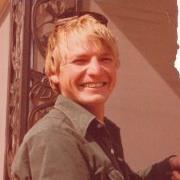
HOW I DONATED MY GALLBLADDER TO SCIENCE FICTION

I woke up in the middle of the night in severe abdominal pain; I ran to the bathroom and bowed down and worshiped the white porcelain god. My wife drove me to the Emergency Room where I spent about three hours waiting in excruciating pain. After a battery of tests, a very nice doctor informed me that they couldn’t figure out what was wrong, and I was released back home. All that day long I sat home in pain.

After trying without success to medicate myself to sleep, my wife again insisted I go back to the Emergency Room — this was a Friday night about 7:00 p.m. I sat there waiting to be seen, in uncomfortable chairs, switching about ten times to get different views of different sick people.

At about 2:00 in the morning I approached “reception” (loose term) and asked, “I’ve been waiting about seven hours. Do you think I could get some help soon?” For some unknown reason they had been taking those with gunshot wounds and those arriving by ambulance ahead of me. An hour or so back I had considered trying to find a gun to self-inflict and thus move up the admission pecking order. Of course at that point they might have just decided I was “beyond hope.” At “reception” the guy at the desk answered, “I’ll go back myself and prepare you a room right now,” and he did. That seven hours in the Emergency Room waiting area has got to rank as the very worst experience of my life.

Within minutes of admission, a beautiful nurse came in and helped me by administering pain medications; after two days of torture, I was finally experiencing some relief. She asked me if I needed anything more, and I replied, “A Swedish massage would be wonderful.” She hadn’t the time for a thorough massage, but said she would ask if one of the other ER nurses had time to spare. Sadly, it never happened. I realized these are busy people.

t’s interesting that without performing any new tests the same doctor who I saw the previous day came in and said, “We suspect it’s your gallbladder.” He was getting in touch with Kaiser surgeons because the gallbladder needed to come out. I said, “A minute ago you said, ‘You suspect it’s my gallbladder,’ and now you say, ‘It’s got to come out?’ Can we try to save it through antibiotics?” He informed me then, “No, the gallbladder is ‘necrotic,’ filled with stones, and had to go. In a few minutes, you will be admitted into the hospital.” He left.

After a while the nurse came back in and I exasperatedly explained that the doctor said my gallbladder was history. She looked at me and said, “Let it go,” and my first thought was, “She’s right. Let it go.” On another visit right before they wheeled me out, I told the nurse, “Getting older can be hard” and she replied, “Yes, it’s not for the faint of heart.” Or faint of gallbladder I thought. In the hospital a doctor came into my room and announced, “You’re a candidate for ’nuclear surgery!’” Too shocked to ask, “What the heck is nuclear surgery,” I was left with my mouth wide open. Was I to become a science experiment?!

Thankfully, a Kaiser surgeon came in soon and explained that they would simply and laparoscopically remove my gallbladder through a small hole below my right rib cage (finally I was to get a bullet hole). At 10:00 a.m. I was taken to a huge surgery room and the surgeon announced, “This is Jonathan Ward, birthday June 24, 1955 and we are removing his gallbladder.” What a relief! I was in the right room and would not get the brain surgery my wife thinks I need. Later, I awoke under a sheet and thought, “OH NO, THEY THINK I’M DEAD!” However, before I could tell them I was alive, a doctor peeked under the sheet and asked, “Do you know where you are?” I replied, “The Playboy Mansion.” About five minutes later I got the same question to which I replied more emphatically, “I told you! The Playboy Mansion.”

I was concerned that missing an organ would negatively affect my life as a Chippendales dancer. However, you may be glad to know missing a gallbladder has not had much effect. Perhaps I have a little less gall? If I took anything away from my experience it would be to take care how you arrive at the Emergency Room, because they’re going to take those ambulance transported and those with gunshot wounds ahead of you. I’m sure they have found mummified remains in the corner of the ER – some forgotten sod who didn’t say, “Hey I’ve been waiting here seven hours and I feel like I’m dying.” So, speak up, be the squeaky wheel or weal, get help; you’ll feel better and may live through it.
THE SOLDIER

by Jonathan Ansley Ward

I visited West Point as part of a family heritage trip.  My family, the Weyants, settled in this area in the early 1700’s; I was visiting to learn more.  My father, from Georgia, had a PhD, and during World War II he ended up teaching at West Point. That’s where he met my mother, Susan-Jane Weyant, of Highland Falls.  

As part of this trip I wanted to see the chapel where my parents were married at the West Point Military Academy.  My cousin David warned me that the grounds were closed to visitors, and my best chance of seeing the Academy was to sign on to a tour.  Well the morning of my planned visit arrived, and for some reason I felt like seeing the sites alone.  Thus, I decided to go to the Visitors Center at the entrance and plead my case.  

I told the receptionists about my mother and father being married there right after World War II, and they gave me a Pass to see the chapel and grounds.  At the entrance, my rental car was thoroughly searched.  Thankfully no weapons were found, and I was in.  I first visited the huge newer chapel, being amazed at its size and beauty.  Then I went to see the smaller, older chapel where my parents married, down by the cemetery.  I wandered through, looking at the memorabilia on the walls, and then sat for a while in the solitude.  Outside, I spent some time walking in the cemetery, reading the headstones – the names and ranks, dates and where served.  

Then I drove down past some athletic fields by the Hudson River and got out again and walked, looking around; it was a quiet Sunday and a good time to reflect and absorb the scene, the beautiful river and awe-inspiring historical place.  I drove up to the large parade grounds bordered by stone gray buildings and statues of famous warriors, notably Generals Washington, Eisenhower, and Patton

I’m the youngest of four children, two older brothers and one older sister.  My teen years were during the Vietnam War.  My eldest brother supported the war, and my other brother did not.  They were exempt from the draft physically as they had had back and knee operations. I was a year or two too young to be drafted.  Many young men and women were being drafted, fighting and dying; 50,000 Americans gave their lives.  And some young people were leaving American to avoid the war.  Thus, it was a challenging time for our country. Later during my college years I never considered enlisting myself.

As I walked on the parade grounds, looking at the statues of great men and the beautiful field, I was wearing shorts, an aloha shirt, flip-flops, and sunglasses.  Approaching me in workout clothes was a very young cadet of perhaps 19 or 20.  I gave him a big smile and said, “GOOD MORNING SOLDIER.”  He lit up and replied, “Good morning sir;” he said it with happiness I suppose at being addressed as “soldier,” and he answered with respect.  

I stopped and sat on a nearby bench, in awe at the commitment and selflessness – this soldier completely willing to give his life for my life, his life for our country.  Needless to say, the respect was due him for his service and commitment.  God bless the soldiers.  


THE WEYANT FAMILY OF THE HUDSON VALLEY, NEW YORK

SEARCHING FOR THE WEYANT FAMILY IN NEW YORK’S HUDSON RIVER AND CENTRAL VALLEYS – by Jonathan Ansley Ward

I am a Weyant.  My maternal grandparents lived in Highland Falls, New York on the banks of the Hudson River.  Growing up, I’d spend some time every summer there. I learned that our ancestors were early settlers of that region. Hearing snippets of family history now and then piqued my interest in discovering more about the Weyant family. Where did they come from, and why did they journey across the sea to settle in a wild and strange land? 

In Europe the 1600’s were a time of ceaseless war.  The Palatine on the western frontier of Germany bordering France was a lovely agricultural region.  In the Thirty Years War the region was the prize sought by contested rulers and their armies devastated the land. Later when armies again moved through the area during the Franco-Spanish war, the Palatine was ravaged. The people of the Palatine suffered; their farms were pillaged; their homes were burned over and over.  The people grew weary of rebuilding in this land of conflict, investing in a future with little hope of a peace and stability.

Among the Palatines was the Weyant family.  They were Lutherans in the flock of Reverend Joshua Kockerthal.  The Palatine Lutherans devised a plan. In early 1708 they left the Palatine and sailed for London.  There they gained the support of Queen Anne.  Initially they were offered land in Jamaica, but they declined upon learning that land up the Hudson River in New York resembled the land and climate of the Palatine. Eventually they were granted a colony about 70 miles upriver.  

What brave and adventurous souls embarked on this journey of settlement. New lives carved from a wilderness awaited, with native Americans and other unknowns to face.  What a gamble! It is recorded that there were 41 Palatines who sailed for the New World in October 1708: 10 men, 10 women and 21 children. Included were the Weyant family: Michael, husbandman, 52; Anna Catharine, his wife, 54; Anna Maria, 13; Tobias, 7; and George, 5.  It took nine weeks to cross the Atlantic and some Palatines did not survive the journey, but thankfully all the Weyants did.

When they arrived in New York, the Hudson River was frozen over so they spent their first winter at the New York settlement on Long Island.  When the ice melted they made their way to their new land.  Eventually, each family was given 50 acres per family member.  The Weyants’ land was bordered by present-day Washington and Renwick Streets in Newburgh. There were, in all, nine family plots of 100 to 250 acres.  In the center were 500 acres of Glebe (church) Lands, which is where the original church was built and the Old Town Cemetery still stands today.  

Michael Weyant lived the rest of his life by the Hudson River; his hope of peace for his family coming true.  He and his sons built the stone house which later became George Washington’s Headquarters and is now a museum.  By the war, his original plot had been sold to the Hasbrouck family who hosted the Colonial leaders.

George and Tobias Weyant were 20 and 22 when their father died. By late 1730 most of the original settlers had sold their lands to seek out more fertile farms in the region, as many Scottish and English families were moving in. Tobias became a Glebe trustee and lived in Newburgh, the town that rose up around the Palatine Glebe. By 1744 George Weyant had moved to a 234-acre farm near Marlborough, New York.

With the changing of Newburgh, Tobias’ four sons, Tobias, Jr., Martin, Berger, and John, were faced with a choice of learning a new trade for town life or moving elsewhere to farm.  Martin acquired choice property and founded the Weigand (Weyant) Tavern which still stands today very near the Old Town Cemetery.  John and Tobias, Jr. both moved to Smith Clove in the Central Valley to farm.  John married Hannah Rider in 1764 and they had four sons, Tobias III, Andrew, John II and George II. 

The late 1700’s brought challenging times to the Hudson River and Central Valleys of New York. A new nation was in the making and to England that meant war.  All citizens were asked to sign a “Revolutionary Pledge” gambling their lives and lands on the American cause.  Not only did they sign the pledge, but the Weyant men left their farms, enlisted in the American Army and fought the British, a major world power at the time. In the Central Valley the Weyants joined the Smith/Woodbury Clove Militia and were called to Fort Montgomery on the Hudson River to fight the British.  Their leader, Captain Francis Smith, was severely wounded in the ensuing battle.  When the cause was lost and the British about to overcome the fort, John Weyant II and his comrade Nathan Miller carried Captain Smith home over the mountains.  They later married Captain Smith’s two daughters on the same day.  After the war, the Weyants returned to their farms. The heroes are all buried in the small family plot along Route 32 at Roselawn Road in Woodbury Clove.

After the war John Weyant I moved his family to Haverstraw in Rockland County.  There he lived out his life by the Hudson.  One of his sons, George, married Catherine Waldron and they are buried in the Waldron Family Cemetery by the railroad tracks in Stony Point.  The family may have moved to take part in the brick industry which blossomed at that time.

Another of John I’s sons, Tobias III had held and worked the family farm while his father and other family members fought in the Revolution. He moved with the family to Haverstraw and later married Jerusala Smith. They had eight children, among them John Weyant III.

John Weyant III and Tobias III moved their families to Doodletown (also called Mountville), New York which is now abandoned and part of Bear Mountain State Park.  Tobias III married Mary Rider and they had three sons, among them King Weyant.  Tobias III is buried in the Herbert Family Cemetery in Doodletown.  The Weyants harvested cordwood there which was used in Haverstraw in the making of bricks.  

King Weyant started carrying freight up and down the Hudson River to fast-growing New York City.  Later he invested in brickyards at Jones Point and Green Cove, not only making bricks but also delivering them to the city. King Weyant married Elizabeth Kessler and they had seven children. After 20 years of working on the river, a friend sold his large farm to King Weyant, and so he moved the family back over the mountains to the Central Valley. The area was then called Queensborough. He later bought more acreage amassing about 1900 acres. Right off the Long Mountain Traffic Circle in Central Valley is King Weyant’s well-marked grave, among other family members.

The Weyants were forced to give up their land in the Central Valley and settle in Highland Falls when the State built the Palisades Interstate Parkway. King’s son Charles Weyant was a businessman, and my Grandfather Chester Weyant was the first mayor of Highland Falls, had an early car dealership and later helped found the Highland Falls Savings & Loan.  My cousin David, a former Savings & Loan officer, has retired to Fort Myers, Florida and I live in Southern California.  Over the last 300 years, the family has multiplied and branched out throughout this country.   

It’s been good to search for my Weyant family roots, highlighting some family members along the way.  One can appreciate and respect their story – how it all began in the Palatine and continued into the New World wilderness.  And in the middle of all that, fighting and defeating the British.  Inspired by those Weyants, I’m proud to be a member of that American family and part of their continuing journey.